

March is Women’s History Month. Similar to Black History Month in February, it gives us an opportunity to celebrate inspiring people from history who have often been overlooked. It’s also a time when we can evaluate the status of girls and women around the world and consider how we can create greater gender-equality.
International Women’s Day, which falls on March 8 every year, was first celebrated in 1911. Since then, it has grown into a global movement recognizing women’s achievements and urging support for charities and nonprofits that benefit women. It’s also commonly when reports on gender equality and gender inclusion are released.
Over the last few decades, the state of women in tech has been a growing concern for many. Tech jobs should provide opportunities for higher pay, better benefits, and greater flexibility for women, yet women are underrepresented in the industry. According to the National Center for Women & Information Technology (NCWIT), women make up 47% of all employed adults in the U.S. However, only 25% of computer jobs are held by women. As Sarah K. White of CIO points out, that number hasn’t changed much over the years despite the fact that STEM jobs have increased 79% since 1990, while overall employment growth has only increased by 34%.
The State of Women in Tech in 2021
So why aren’t more women working in tech?
For one thing, fewer women enroll in programs for STEM degrees. This might partly be due to longstanding myths and bias that boys are better at math than girls.
But even as more women are choosing to study science and engineering than ever before, women are not more likely to actually work in these industries. For example, only 38% of women with computer science degrees actually work in that field, while 53% of men with the same degree do.
Studies show that even when they hold the same degrees as their male counterparts, women are less likely to get these jobs and less likely to remain in the field long-term. Those who leave often cite gender-related discrimination, lack of workplace diversity, unfair compensation, limited opportunity for advancement, and pressure to constantly prove themselves as common reasons women leave tech jobs.
Famous Women in Tech
Clearly, the tech world still has work to do on achieving gender equality. After all, we know women have a lot to offer this industry because of the many important technological innovations that have come about as a result of women’s work. So to celebrate Women’s History Month, TracSoft has decided to highlight just a few of the amazing women who helped make the world we live in today.
Grace Murray Hopper
Grace Hopper (1906-1992) was an American mathematics professor. As a child, she had been fascinated by mechanical things like clocks and appliances, often taking them apart to see how they worked. She did well in school, eventually graduating from Vassar College with degrees in mathematics and physics. She then went on to complete her PhD. in mathematics at Yale before returning to teach at Vassar in 1931.
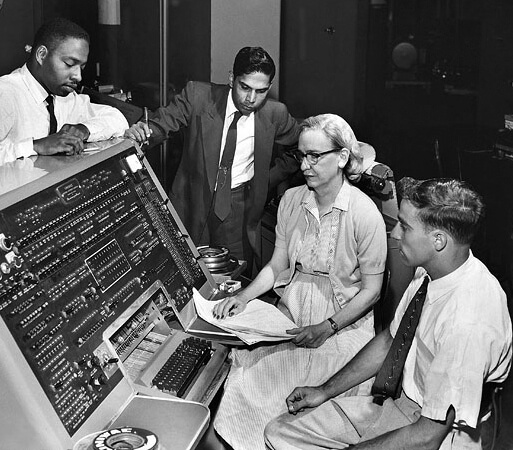
When WWII began, Hopper tried to enlist but was rejected for being too old and under the minimum required weight. However, she volunteered to serve in the WAVES and was assigned to work on a team at Harvard that was producing the Mark I, a precursor to the electronic computer. The Mark I was intended to be a general-purpose machine that could solve long computations automatically, and eventually it helped in the development of the Manhattan Project. As part of her work, Hopper also wrote manuals that outlined the basic principles of how computers would work—and she coined the term “bug” to describe a computer malfunction.
After the war, she went on to work at the Eckert-Mauchly Computer Corporation as it developed the UNIVAC, the first commercially-produced digital computer. This computer was quite different from modern machines, weighing in at 16,000 pounds and performing 1,000 calculations per second. In contrast, the average PC today can be lifted by one person and can execute over a billion calculations per second.
One of Hopper’s most notable contributions was to begin writing computer programs in words rather than symbols. This made computing much more accessible to average people and was a huge step toward getting businesses to adopt computers into the private sector. She designed COBOL as part of this plan, and it became the most extensively used computer language worldwide by the 1970s.
Hopper retired from the Navy at 79, making her the oldest serving officer in the U.S. armed forces. She was buried in Arlington National Cemetery with full military honors, the recipient of many honors and awards.
Katherine Johnson
Katherine Johnson (1939-1956) was an American mathematician who calculated flight paths of spacecraft for NASA. Her work with the U.S. space program helped land astronauts on the moon in 1962.
Johnson was gifted at math from a young age, and at only 18 years old, she graduated with highest honors from West Virginia State University. She began teaching, but in 1939 she was selected to be one of the first three Black students to integrate the graduate programs at West Virginia University, where she earned her Ph.D. in math.
In 1952, Johnson heard about an opportunity at the National Advisory Committee for Aeronautics (NACA – later renamed NASA). The organization was hiring people to solve math problems that would help with designing rockets and spacecraft. Part of her job involved analyzing data from flight tests and investigating crashes to learn from them. Her research eventually led her to perform trajectory analysis for America’s first human spaceflight, Alan Shepard’s 1961 mission Freedom 7.
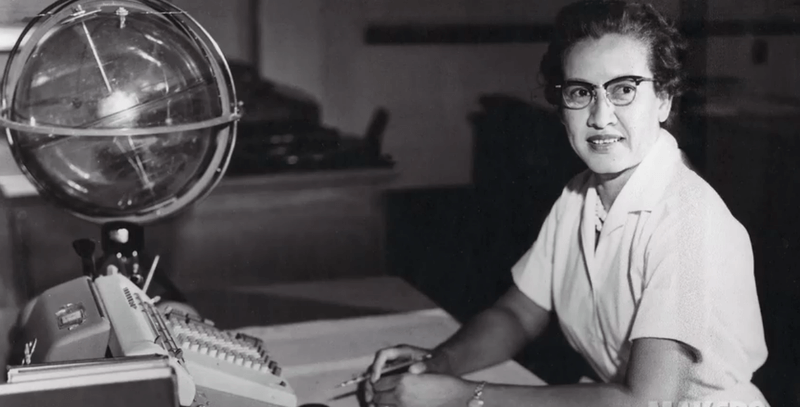
In 1962, NASA was preparing for John Glenn’s Friendship 7 mission to orbit the earth. NASA was using computers to calculate the ship’s orbit around and return to Earth, but these early computers were prone to glitches and blackouts. Before starting the flight, Glenn specifically requested that Johnson calculate the same equations the computers were working on, but that she do them by hand. He told NASA, “If she says they’re good, then I’m ready to go.”
Johnson worked for NASA for 33 years, authoring many papers and working on many significant missions during that time. This included working on Apollo’s Lunar Module, the Space Shuttle, and the Earth Resources Technology Satellite (later renamed the Landsat).
Susan Wojcicki
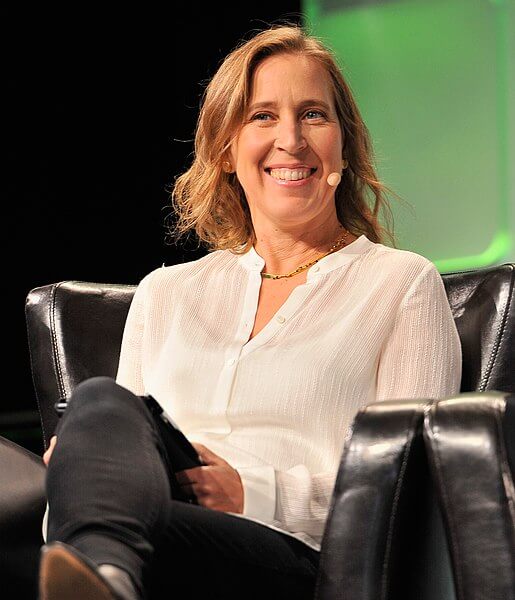
Susan Wojcicki (1968-Present) was the senior vice president in charge of marketing at Google Inc., and is currently CEO of YouTube. Wojcicki studied history and literature at Harvard, economics at the University of California, Santa Cruz, and business at the University of California, Los Angeles. The garage of her Menlo Park home was also the first headquarters of Google, although she didn’t work for them at the time.
Wojcicki had worked in marketing for other big names before joining Google, including Intel, Bain & Company, and R.B. Webber & Co. Google hired her to find a way to make money from their search engine, which led to the development of AdWords in 2000. She was also influential in the acquisition of Applied Semantics, which evolved into Google Analytics. This tool, combined with the later acquisition of DoubleClick, meant that Google could track users’ activity online and serve them ads they were more likely to respond to. Google’s model revolutionized internet marketing.
It was also Wojcicki who encouraged Google to purchase YouTube in 2006 for $1.65 billion. She has run YouTube since 2014, and the platform’s worth has skyrocketed to $90 billion. In part, this is due to innovations in monetization she introduced that allow creators to gain ad revenue, as well as income from channel memberships, merchandise, and Super Chat. Wojcicki has also overseen the development of YouTube Premium and YouTube TV.
Joan Ball
Joan Ball (1934-Present) was an online dating and social networking pioneer who launched the first computer dating service in 1964. Although her business fell on hard times and she eventually sold out to a competitor, the matching system she developed continues to influence online dating companies even today.
Ball was born to a poor family not long before the start of WWII, and during her childhood she was frequently evacuated from London to escape aerial bombardments. She struggled in school due to undiagnosed dyslexia, and continued to struggle as a young adult since she was unable to do many common jobs that required reading or math skills.

In 1961, she took a job at a marriage bureau. Marriage bureaus did not have good reputations at the time, with many suspecting they were fronts for prostitution, but Ball found she was good at matching couples. Eventually she started her own marriage bureau, Eros Friendship Bureau Ltd. Ball had to be clever about how she advertised her company since most newspapers and radio stations refused to let her run ads. She turned to pirate radio stations off the coast of England who played rock and roll music that Britain had banned. Although this limited the audience for her ads somewhat, it also made her dating business seem new, edgy, and exciting. In spite of these challenges, her company was successful—so successful, in fact, that she couldn’t manage all the requests she had.
In 1964, Ball began running computer match ups. Although a few Scandinavian countries and a team at Harvard were experimenting with computer matching, no one had actually started setting up dates using a computer until Ball did it. She had participants fill out cards with information that they did not want in a partner. This information was put into the computer program, which excluded bad matches and then produced a list of the top four most compatible matches. The system was extremely successful, and with more matches, Ball was able to continually refine her system. By 1965, she had merged with another marriage bureau, bought out her partner, and renamed the company Com-Pat.
Eventually, a poor economy, postal strikes, and coal strikes that created nation-wide blackouts all hampered the business. Ball fell into debt, and in 1974 she sold her business to her main competitor, John Patterson of Dateline. Ball went on to do other things in life, eventually overcoming her dyslexia and writing an autobiography, Just Me. Although Ball has become one of the forgotten women in tech, her questionnaires and matching algorithms continue to underpin popular dating sites like Match.com, Tinder, and OK Cupid.
Kimberly Bryant
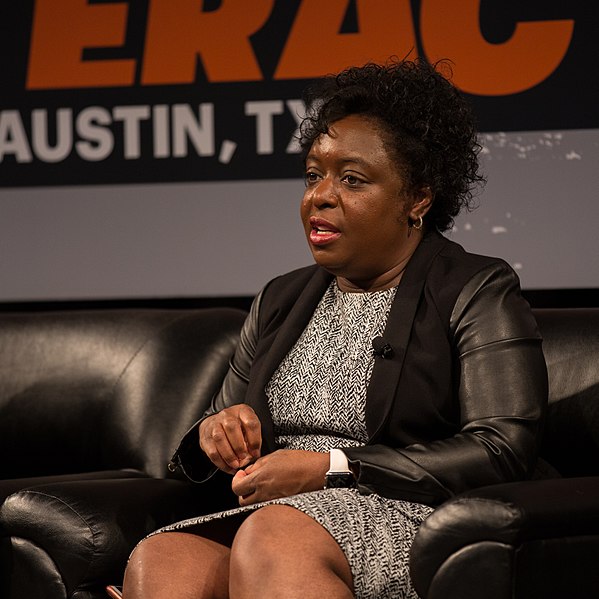
Kimberly Bryant (1967-Present) is an electrical engineer working in the biotechnology field. She’s best-known for founding Black Girls Code, a nonprofit that provides after-school and summer coding courses for young girls from minority backgrounds. Additionally, she frequently speaks about and advocates for better inclusion in the field of technology.
In 1985, Bryant earned a scholarship to attend Vanderbilt University, planning to become a civil engineer. However, she was fascinated by emerging technologies like the microchip, personal computer, and portable cellphone. So she switched her major to electrical engineering and minored in computer science and math.
Bryant started her career in Westinghouse Electric and DuPont, but later she moved into biotechnology. She has worked with companies like Pfizer, Merck, Genentech, and Novartis. Currently, she also serves on the board of multiple initiatives that promote diversity in tech, including the National Champions Board for the National Girls Collaborative Project and the National Board of the NCWIT K-12 Alliance.
Adele Goldberg
Adele Goldberg (1945-Present) is a computer scientist known for developing the programming language Smalltalk-80. Although it’s been around for a long time, Smalltalk is the technology underpinning many modern coding languages like Java, .NET, and Android. It has also influenced languages like C# and PHP, which is why Adele Goldberg is currently one of the most respected women in tech.
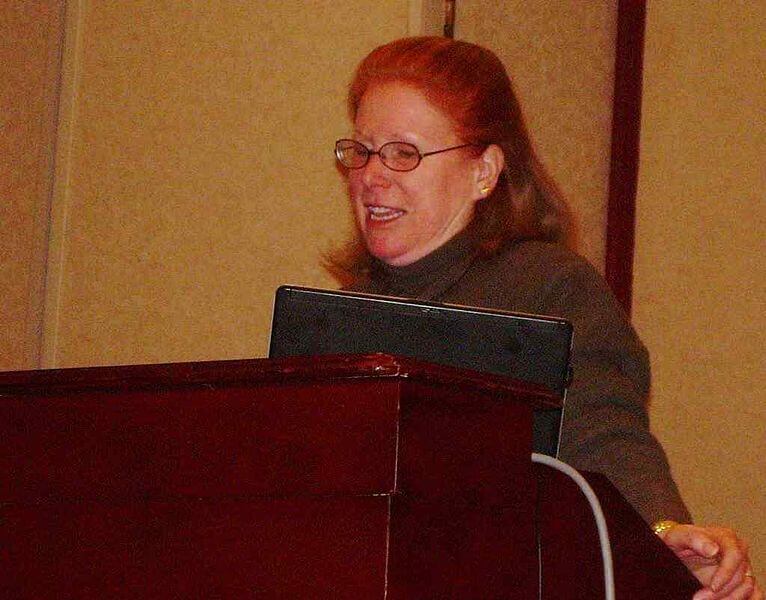
Goldberg began studying mathematics at the University of Michigan before earning her master’s and Ph.D. in information science from the university of Chicago in 1973. After, she took a job as a laboratory and research assistant at PARC, working her way up to become manager of the System Concepts Laboratory. It was here that she worked with Alan Kay on developing Smalltalk-80. The language was a breakthrough in programming because it was significantly easier to use than most others and allowed for live debugging.
Goldberd also wrote “Personal Dynamic Media,” an influential article that helped outline the vision for the Dynabook, a portable personal computer designed for children. The Dynabook would offer many of the same features as a laptop or tablet computer, and in fact it has influenced the development of many of the portable devices on the market today. Additionally, Goldberg and her lab team helped pioneer graphic interfaces that have made personal computers much easier for the average person to use.
Eventually, Goldberg founded Neometron, Inc., an internet support provider. She has long been an advocate of education, serving on the board of Cognito Learning Media. Currently, she works creating computer science courses for community colleges throughout the U.S. and abroad.
Interested in Rocking the Tech World?
Do you have big dreams and the desire to use technology to achieve them? Are you looking for a way to help a girl in your life learn more about the tech industry? Then check out the resources below to find STEM programs that are just for girls!
- Girls Who Code: A US-based program with after-school clubs for 6th-12th grade girls and summer programs for 10th-11th grade girls. These programs take place at leading technology companies. The program also offers college programs to help their alumni network with other women in tech.
- Black Girls Code: An organization serving girls of color ages 7-17 by helping to provide access to and training in computer science and technology.
- Code.org: A nonprofit dedicated to expanding access to coding to underrepresented populations. Students can learn at home or at school using characters and games they know. Code.org also has locations in all 50 U.S. states.
- Womanity: A nonprofit working to provide vocation training and career opportunities for women. When women are educated and employed, they can help reduce poverty and build the economy in struggling countries around the world.




.jpg)

